Toys and Games

Geeky Accessories for Girls and Boys

Here at Jump!Mag we can get pretty geeky – and we’re proud of it too! We love wearing things that show people what our interests are, whether that’s books, superheroes or Doctor Who. Read on to find out about our ten favourite accessories to help you express your inner (or outer!) geek.


Moldiv_1411146112106


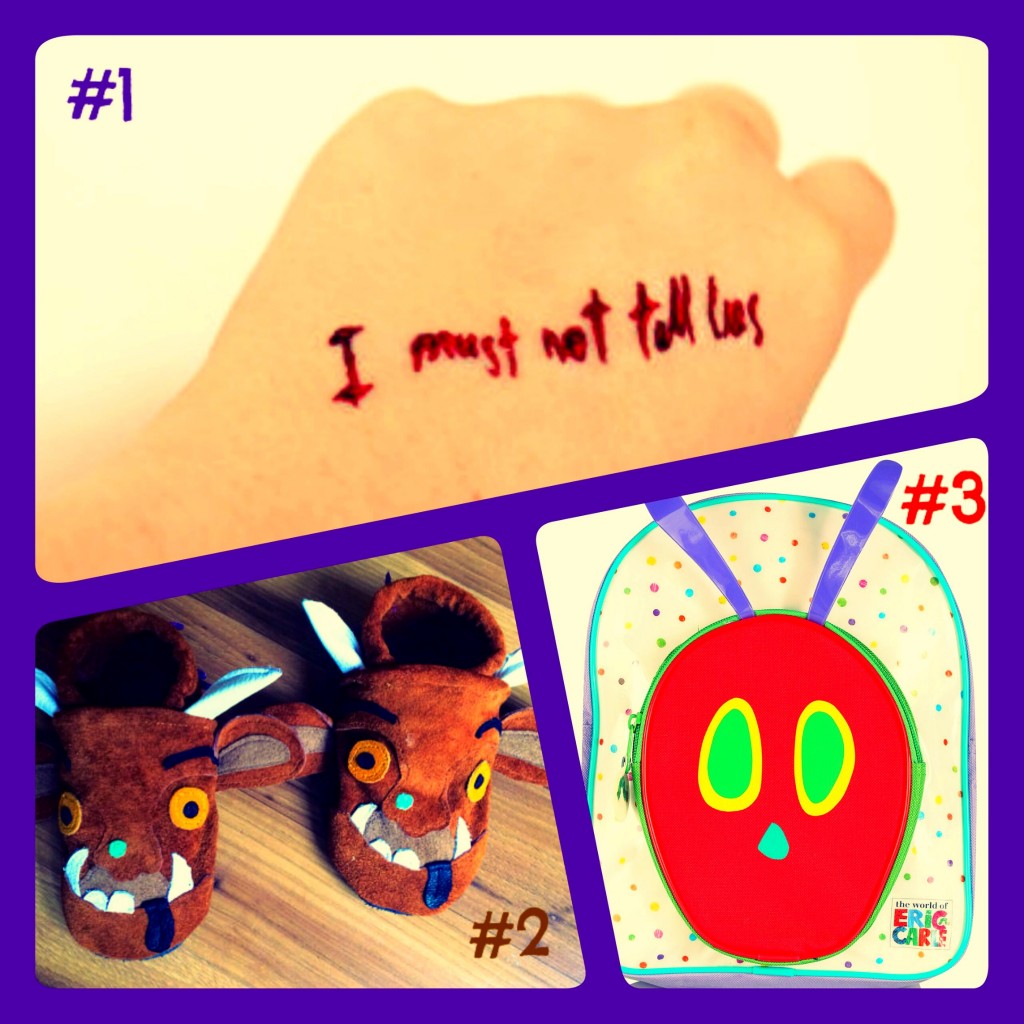
We all hate Professor Umbridge and how she treated Harry. Now you can freak out your mum and your friends with this temporary tattoo from Harry Potter and the Order of the Phoenix (#1).  And for those of you who like wearing clothes inspired by your fave books, try this lovely Very Hungry Caterpillar rucksack from Asda (#3), or scare away snakes, foxes and owls with these Gruffalo slippers (#2) – complete with purple spikes and the wart on the end of his nose!


Moldiv_1411146666838


If you’re a comic book lover, you’re spoilt for choice! We love this Batman umbrella from M&S (#4) and this Spiderman water bottle rocks (#7). (Ignore the ‘for boys’ and ‘for girls’, and just get what YOU like.) Sport your favourite superhero on your iPhone with a comic book phone cover like this one from Louby Kapow (#5) – made from real comics! – or go for Thor-inspired shoes with these ace lightning shoelace attachments from Tesco (#6).

Read More...

Written By You

Are Rewards the Right Approach? Written By You

14-year-old Gabriella told us that her school gives lots of rewards for doing well, or for good behaviour. It got her thinking about reward systems, and if they are a good idea.

I’m sure everyone has been offered a reward for doing the right thing at some point in their lives, whether it has been your parents rewarding you for your actions or teachers at school.

When you are presented with the idea of a reward it makes you want to succeed right? Or does it? I know from personal experience that people aren’t necessarily excited by the prospect of being given a reward and when they are, they are usually set on the reward and not the idea behind it. For example, prizes for winning competitions often attract entries and participants often enter because of the prize and not because they are really interested in the theme of the competition. The same kind if thing comes out of rewards at school.

Read More...

Language & Literature

Do Earwigs Really Live in Our Ears?

do earwigs really live in our ears

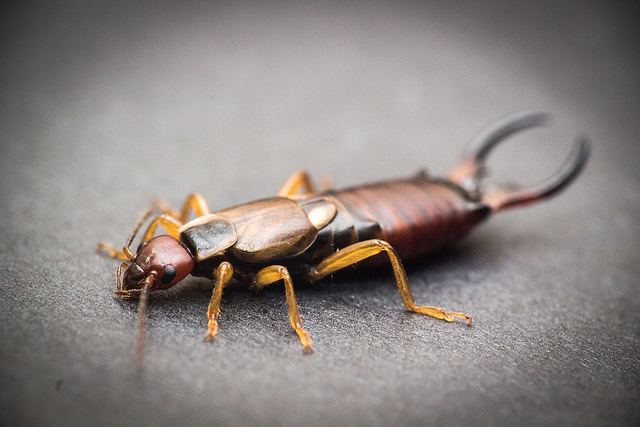
There has long been a myth that earwigs use human ears either to lay their eggs or to live in and feed off our ear wax, or other similar things. It sounds pretty gruesome, doesn’t it? After all, who would actually like the idea of an insect living inside their ear? But do earwigs really live in our ears?

Fortunately for us, it is not true. Despite their name, earwigs don’t actually live in our ears and neither do they use them to lay eggs. They much prefer their normal habitat of nests under rocks and logs or in flowerbeds. So where does the earwig get its name?


Old English Origins

Yet the name itself suggests that this has been a myth for a long time, so let’s examine the name. It can easily be split into two parts: ear and wig. These two parts both come from Old English; which is what we call the language as it was spoken when it was first written down, right up to the tenth century. So this would include the period of Kind Alfred the Great; he of the burning cakes.

In Old English, the words were eare and wicga. The first part, which you can recognise quite easily, meant ‘ear’. But the second part, wicga, meant ‘insect, beetle, worm’. The interesting thing is that it came from a root that did not have anything to do with insects at all, but instead meant ‘wiggle’.

Think about how even today we say ‘wiggly worm’; or think about how you would describe the movement of a caterpillar. You can see how this word came to be associated with insects. So if we put the two parts of our word together again, we have ‘ear-insect’. It seems that our very early linguistic forebears did indeed believe that earwigs lived in the ear.

Blame it on the Romans

But where did this myth that they dwell in our ears come from? It is not unique to English; in German it is known as Ohrwurm, or ‘earworm’, and it is the same in Welsh with pryf clustiog; while in French it is perce-oreille, or ‘ear-piercer’.

To find the origins of the myth, we have to go back in time all the way to the days of the Romans. In around 77 CE, Roman naval commander and writer Pliny the Elder published his work Historia Naturalis, or Natural History.

In it he writes about a great deal of the natural world, including insects. It is here that the myth may have begun, as he writes about earwigs getting into the ear. Perhaps he saw one that had happened to go into the ear by chance, much as a fly or a spider might, and jumped to the wrong conclusions.

The Pincer Insect

Other languages have taken the name from the apearance of the insect; in Italian it is known as forbicina, and in Spanish it is tijereta, while Greek has ψαλίδα [psalida] All three of these translate as ‘little scissors’, deriving from the pincers that the earwig uses to catch its prey.


Featured Image by Tom Bullock / Flickr 

Read More...

Art & History

Great Women You Should Know – Mary Wollstonecraft

Mary Wollstonecraft is known as one of the earliest feminist thinkers and writers to become famous and influential throughout Europe.  This reputation comes from the publication of her book “Vindication on the Rights of Women” in 1790.  At the time it was written, women in Britain didn’t go to school, weren’t allowed to vote or do the same work as men. But who was she, and where did she come from?

Read More...