

Who Invented the First Electric Battery?
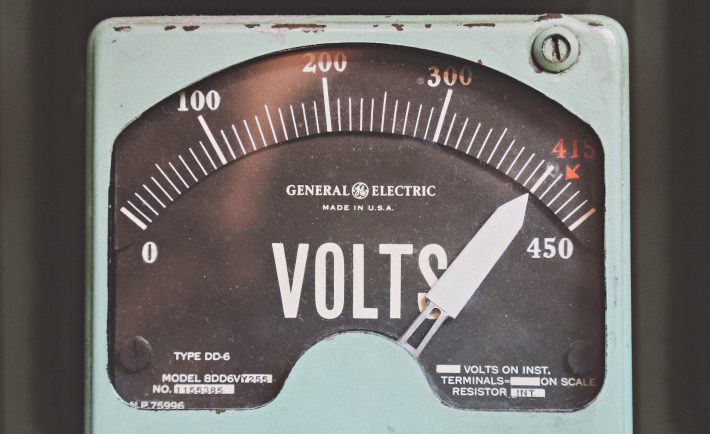
When we talk about electric batteries, we often talk about voltage. But did you know that this word is named after the person who invented the first electric battery? First, let’s take a look at what a volt is, and then we’ll find out more about the guy who gave the ‘volt’ its name.
What is a Volt?
A volt is defined as a unit of electric potential and electromotive force, and voltage refers to the number of those units. That sounds a lot more complicated than it is! If you think of the water in a tap being like the electricity running through a wire, the voltage means the amount of pressure. This video is quite long but explains it very well.
Why are Volts Called Volts?

Alessandro Volta
The term actually comes from a name. It was coined in honour of Italian physicist Alessandro Volta, who is recognised as the inventor of the first electric battery. During the 1790s, Volta worked on the theories of electricity of the day.
Volta disagreed with the theory proposed by fellow Italian scientist Galvani that electricity was generated by animal tissue. Instead of experimenting on frogs or other animals, Volta did experiment after experiment with metals.
His persistence paid off, and in 1800, he invented the world’s first battery, known as the ‘voltaic pile’.
The Voltaic Pile
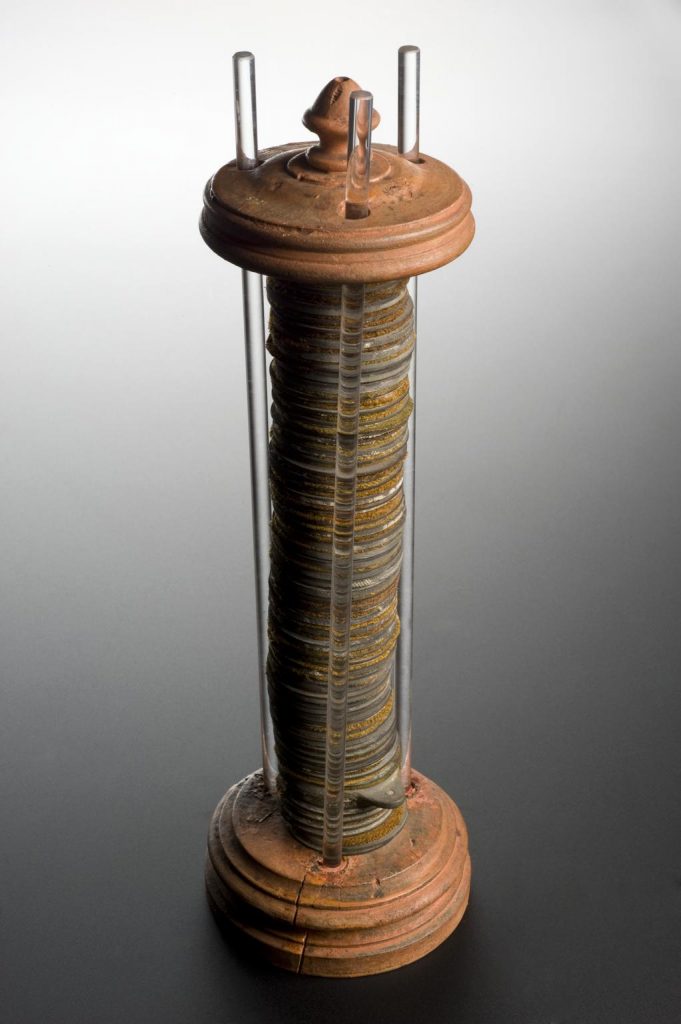 This voltaic pile was simple but ingenious. It consisted of a pile of zinc and silver discs. But alternating between them was a piece of cardboard, or a piece of cloth, that had been soaked in saltwater.
There was a wire that connected the zinc disc on the bottom to the silver disc on the top, and this wire was capable of producing sparks.
What else Did Volta Invent?
The invention of the first electric battery brought Volta the most fame and recognition, but he also made other discoveries. He invented the electrophorus, a device that could transfer an electrical charge to other objects, as well as an electrical condensor, and the voltaic cell.
He is also known for having discovered and isolated methane gas. After his death, the volt and voltage were named in his memory.
What about Galvani?

Luigi Galvani
Yet there is one more twist to the tale. Volta’s longstanding colleague Galvani of the animal electricity theory also left his name in our language. When we say ‘galvanise’ or ‘galvanism’, that is where it comes from.
Despite their differing theories, there was no rivalry between the two scientists. They were both more concerned with the pursuit of knowledge than with whose theory would prove to be right, and it was Volta who first coined the word ‘galvanismo’ in Italian.
Featured Image by Thomas Kelley on Unsplash
What Makes a Family?
What does the word ‘family’ mean to you? It can mean many things in our society. Some define family as a mother, a father and one or more children. For others, there don’t need to be children in the home for there to be a family. Where there are children, about three quarters of the parents will be married to each other.
In 2013 the Office of National Statistics, which is a government body which takes surveys on all manner of topics to help the government make policy (rules under which we all live), found that there were 18.2 million people living in this type of family. Many more of us have families which have a different make-up. For the purpose of the survey, a family is defined as people living in the same household.
However, as many of you will know, there are other ways in which we describe our family. There are children who have two parents of the same gender, there are children who have only one parent with whom they live, other children have guardians and live with aunts, uncles or grandparents.
What is Your Favourite … Poem?

Everyone has their favourite song, their favourite film; some of us even have a favourite book. Carolyn Ward wants to know if you have a favourite poem.
12 Steps to Becoming a Self-Confident Kid

Do you ever wish you were more confident? Do you watch other kids standing in front of the class, and presenting their work, and wish you be that self-confident kid?
We often talk about self-confidence and self-esteem in tweens. These two are linked, but slightly different. Self-esteem is about how you feel about yourself, how you value your abilities and yourself. Self-confidence is about how you feel about your abilities, about trusting yourself to do something.
You could have a high self-esteem generally, but have low self-confidence in a particular area, e.g. doing maths, or standing in front of the classroom and presenting a book report.
We often split people into ‘confident’ and ‘not confident’, but we can all learn to be more confident. It just takes a bit of practice. Here are our top tips for increasing self-confidence and self-esteem!