Written By You

Drama Clubs for Kids – Written by You

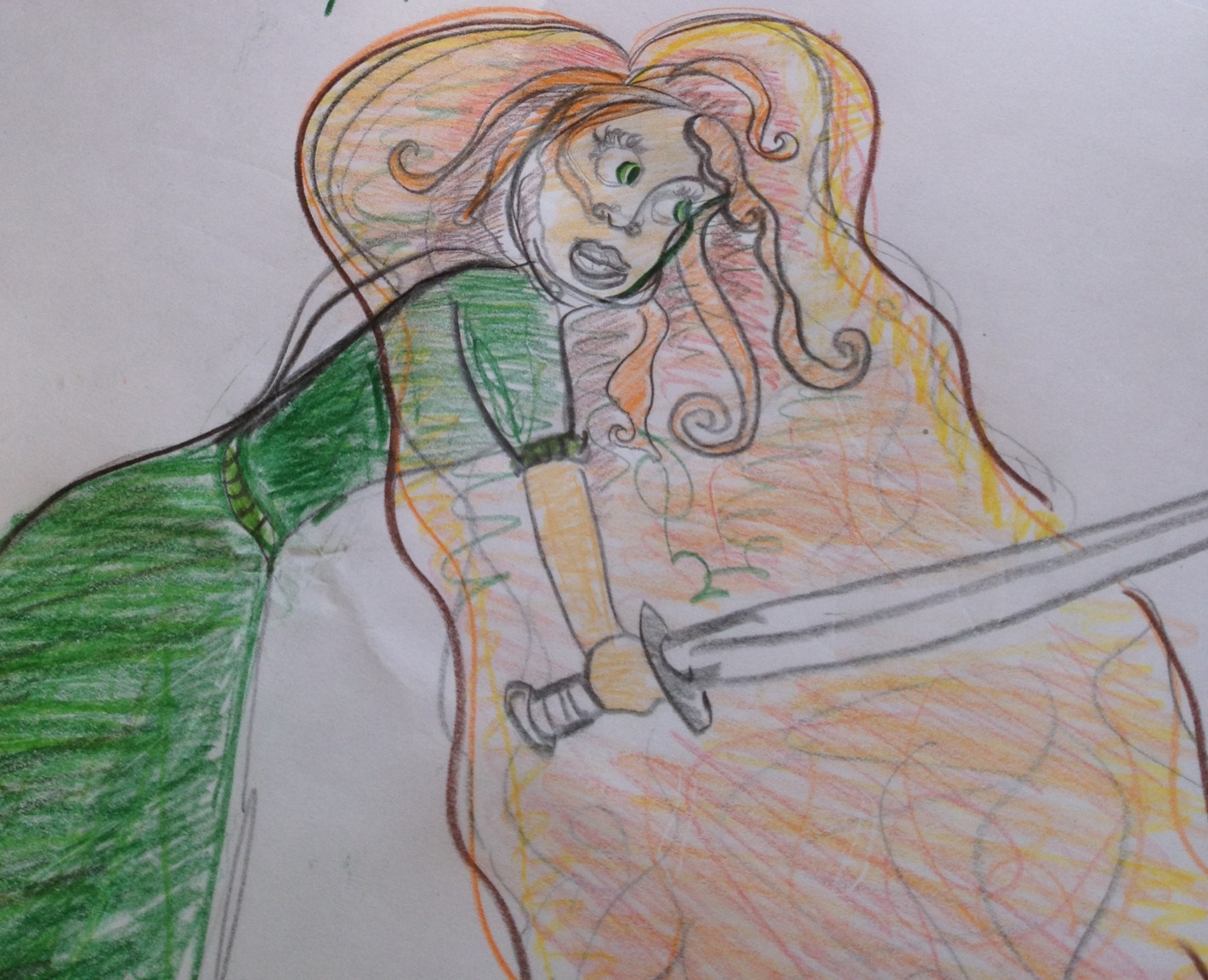
Hi! My name is Cait, I’m 14 years old and I live in the North-East of England. No matter where you live in the world, there is a good chance there are some drama clubs for kids in your area. Drama is one of my favourite hobbies, and I thought by answering some questions it may make you think about starting drama!

Do you have to know what you are doing?

No! When I first started doing drama I had absolutely no idea how to act, and that was okay. I went into this small drama club and had no idea what I was doing. But over the time that I went there, I gained skills and I learnt how to act. Going into drama having no idea what you are doing can be good because it means you can learn so many new skills, which is great! Over time you can learn how to do other things as well such as singing or dancing!

Read More...

Science, Nature and Tech

Winter Wonderings – Are Snowflakes Really All Different?


It’s a common belief that no two snowflakes are the same, and in a way this is true. No snowflake can ever be completely identical to another, because when you get down to the molecular level they will have slightly different kinds of water molecules, different electrons and different traces of other materials such as specks of dust.

However, if we’re talking only about the appearance and shape of a snowflake, then yes it is possible that some will have duplicates. Snow crystals can vary from fairly simple, hexagonal structures to the more complex and delicate shapes that we commonly think of as snowflakes.

The simple flakes have far fewer molecules than their larger cousins and so it’s entirely possible that you could find two that appeared identical when viewed through a microscope. The more complex structures, however, can have more than a hundred different features and each feature can form in a number of different ways. This makes it highly unlikely that you would ever find two large snowflakes that looked the same – but you could have fun trying!

For a more detailed explanation of the science behind the forming of snowflakes, check out this video


Read More...

Art & History

What is the Mexican Day of the Dead (Día de los Muertos)?

On  1st and 2nd of November, Mexico celebrates its Day of the Dead (Día de los Muertos). This is a festival that begins on 28th October and ends on a public holiday on 2nd November. During this time, Mexicans believe that the deceased have permission from God to visit friends and relatives on earth, and once again enjoy the pleasures of life. It isn’t seen as a time of sadness and mourning but as a celebration of life.


Where Does the Tradition Come From? 


The Aztecs believed that death was just a part of the circle of life and offered gifts to the goddess Mictecacihuatl (“Lady of the Dead”) for deceased children and adults. This tradition was incorporated into the Catholic celebration of All Saint’s Day and All Soul’s Day when the Spanish conquered the country. You might know All Saint’s Day by its other name – Halloween!

Read More...

Art & History, Popular

Awesome Women Who Disguised Themselves as Men to Follow their Dreams
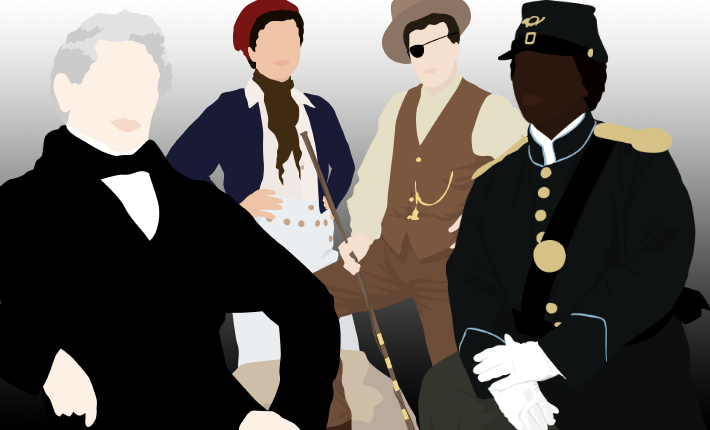
Throughout history girls and women have been told, ‘You can’t do that! You are a girl!’ Luckily, this attitude is becoming less common in many countries and cultures, but what did women do in the past? If they wanted to be a doctor, a musician, a sportsperson or even a soldier?

Most women put aside their dreams or practised other activities that were deemed appropriate for women. Some women protested, like the suffragettes who demanded to be allowed to vote. And a small number of women went much further. Today we are taking a look at the women who disguised themselves as men in order to follow their dreams.
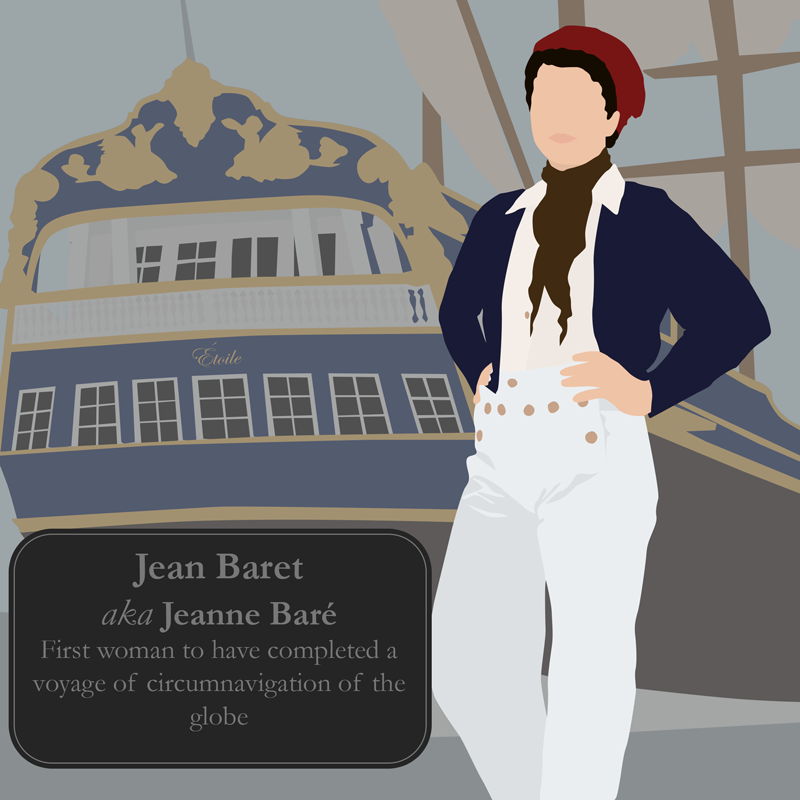
 

The first woman to circumnavigate the world – to go all the way around the globe. Born in France, and with an interest in botany (the study of plants), Jeanne became first the housekeeper, and later the partner of a famous botanist Philibert de Commerson.

Read More...

Art & History, Popular

Early English Writing – Runes and the Futhorc

runes

Did you know that English hasn’t always been written using the alphabet that we know today? There have been several changes in the way we write over the centuries. We shall start by looking at the runic script. You may already have heard of runes, and perhaps you know that the term refers to some form of writing. We’ll look at runes and the early English alphabet called Futhorc. 

Runic Script

First of all, what are runes? Contrary to what legend and hazy modern stories may tell us, runes are not magical, and they are not an exclusive part of an ancient Celtic religion or only associated with druids. Neither are they symbols of the mysterious or spiritual. It is very simple. Runes are letters.

Runic script is a system of writing that is surprisingly close to what we use today in its concept: runes are the letters in a set of alphabets (sometimes called ‘runic alphabets’). These alphabets were used to write Germanic languages. Not simply German as we know it today, but other languages in the same family. This means that it includes English. In fact, the earliest form of writing for English was runic.

The very early form of English that evolved from a language we call Proto-Germanic, which we believe gave rise to many other languages such as German, Dutch, Swedish and others, is known by the term Old English and sometimes also Anglo-Saxon. The second term reflects the names of the Germanic tribes which are believed to have formed the main group of speakers that arrived on the British Isles to displace Celtic languages. It is this early form of English, Old English, which was written in runes.


The Futhorc or Fuþorc

The version of runes used to write Old English is known as the Futhorc. It was developed from the older system of runes used to write other, earlier West Germanic languages, known as the Futhark (fuþark). This Futhark consisted of 24 runes, and the early English speakers found it necessary to expand that and add extra runes to reflect the changes in pronunciation, or the sounds that gradually became part of the language. 

They started by adding two extra runes, and this gradually increased until the Futhorc consisted of as many as 33 runes, or letters. You may be thinking that this is rather a lot – but then consider that our modern alphabet uses combinations of more than one letter in order to represent one sound, such as ‘th’ or ‘sh’ and so on. The Futhorc has a separate letter, the thorn þ, to represent ‘th’. 

Now, in modern English, we use the Latin alphabet with a few modifications to write our language. The Latin alphabet was first adapted from the Etruscan alphabet, which was in turn derived from the Greek alphabet, and this is where we get its name from.

We call it ‘alphabet’ from the first two letters, A and B, which in Greek are alpha and beta: alphabet. So what about this ancient runic system? Where does the name ‘futhorc’ come from?

There is nothing mysterious about it. It is not an arcane word with some sort of symbolic meaning requiring years of study to understand. When we break it down, it is the same idea as the alphabet. The name ‘futhorc’ derives, or comes from, the first six letters of the runic alphabet. These are feoh (F), ur (U), thorn (TH), os (O), rad (R) and cen (C); FUTHORC, as you can see.


It is essentially the same concept as the alphabet that we use today: each rune, or letter, was used to represent a phoneme, or sound, the basic building blocks of our words.

The Futhorc was used for several centuries to write down English, and for a while when the Latin alphabet was first used for English, the two were both in use at the same time. You can even see some early monuments which have both systems of writing side by side!

Runes were used from around the fifth century to the ninth or tenth centuries in English, although the Germanic Futhark is much older than that.

In our next post, we’ll take a look at the Latin Alphabet, and tell you where you can go to take a look at RL examples of the Futhorc and the Latin Alphabet.

SaveSave

SaveSave

SaveSave

SaveSave

SaveSave

SaveSave

Read More...