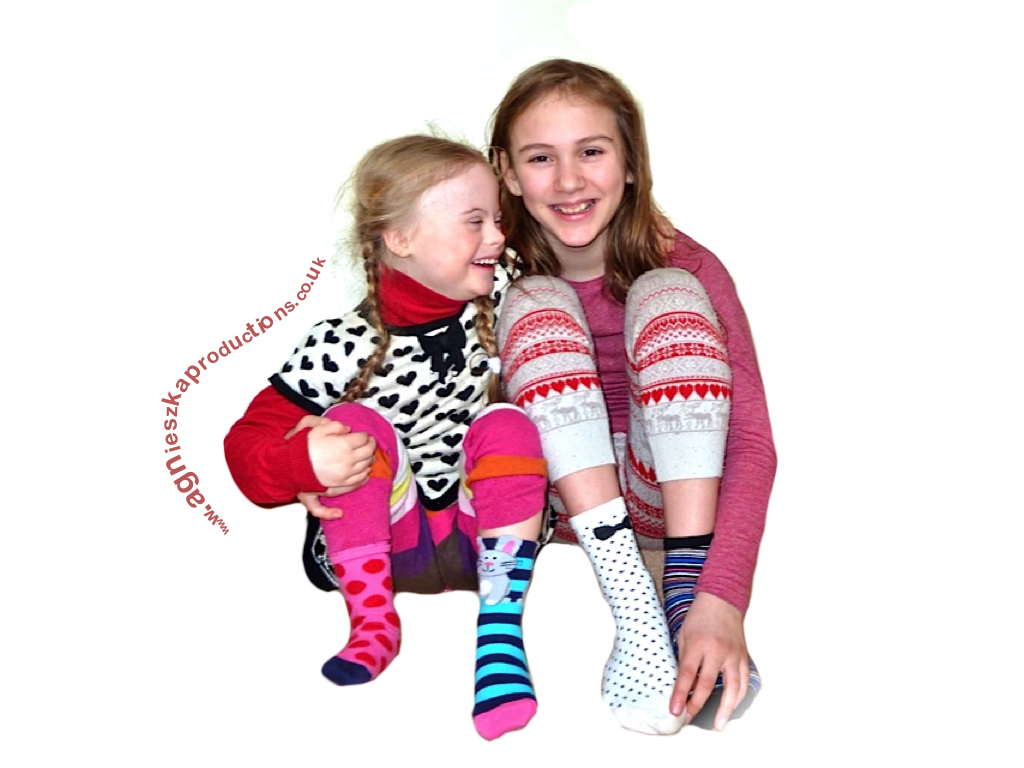
Do you sometimes wear non-matching socks? When you can’t find ones to match or just because you want to? Well on the 21st March you have the perfect excuse to and Agi is going to tell you why.
Agi has been making videos about her life with her little sister, who just happens to have Down Syndrome, for many years. We asked her to tell us more about this condition, and about life with Magdalena and to share some of her videos with us.
Firstly though who am I?
I’m called Agnieszka (Agi for short) and I am home educated with my little sister Magdalena, who is 7 years old. I have a website which I blog on about our life together and anything else I am interested in. I want to be a filmmaker when I’m older, and you can view lots of films that I’ve made on my website, and Magdalena wants to be an artist. She is one of my best friends. We have loads of fun together, and I don’t treat her any differently or treat her ‘specially’, even though she happens to have Down’s syndrome. Which is where the lots of socks come in…but first, let me explain.
I would never have known this unless my little sister, Magdalena was born with an extra 21st chromosome.
Have you worked out yet why World Down Syndrome day is on the 21st of March?
It’s because people with Down syndrome have three chromosomes on chromosome number 21, instead of the usual two. This is also known as Trisomy 21.
Why is it Called Down’s Syndrome?
So why call it Down’s syndrome? No, it’s not because people with Down’s syndrome are ‘down’ or grumpy, it’s actually because Dr John Langdon Down discovered the condition, and it was named after him.
Lot’s of people my age don’t know what Down’s syndrome is, (actually lots of adults don’t either) and that can make them scared of what they don’t know about, so they ignore Magdalena or talk ABOUT her instead of TO her or say something unkind thinking she won’t understand or be hurt by it. So before I get onto the socks, I want to tell you a bit about what Down’s Syndrome is and what it isn’t!
Read More...