


What Happens After Someone Dies?

Parental information – this article contains a frank factual interview about what happens to a person procedurally after they die.
Have you ever wondered what actually happens after someone dies? And what is it like to work in this area?
This subject can be a difficult and emotional one, but the whole mystery surrounding death can be better understood with a clear explanation of what happens, step by step.
Carolyn Ward talks to Anna, a mortuary assistant or ‘Anatomical Pathology Technologist’, about what happens when somebody dies, and what led her to choose such a potentially sad career.
Life in an English Village
When we think of a country, we often think of a stereotype – an oversimplified image or idea. These are some country stereotypes – can you guess which countries we are meaning here?

Stereotype 2

Stereotype 1
Sometimes a stereotype is used in a negative way, but often we use them because they are the only things we know about the country we are talking about. They are often based on a truth about the country and can be a part of life in that country.
An English Village is today’s topic. When you search for an image of ‘English Village’ you might find something like this

English Village
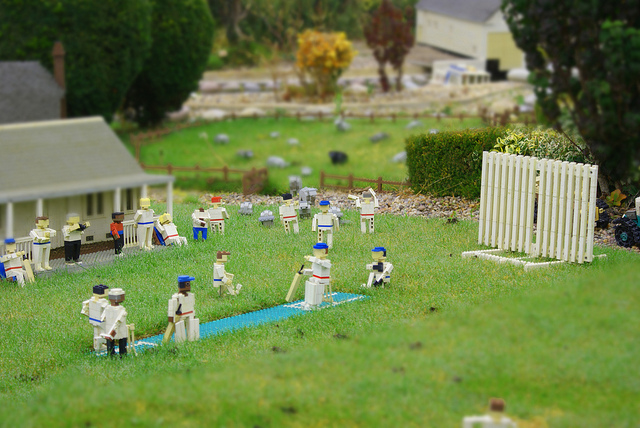
You might think that living in an English village is all thatched cottages, red telephone boxes, and Sunday afternoon cricket. That is certainly the stereotype!
If you live in a city, you might also think that living in a village like this would be boring, that there might not be much to do, but you would be surprised how busy life in a small community can be.
We asked our contributor Liz to tell us what it is really like to live in a small English village not far from the capital city, London.
Six Ace Classroom Gadgets You Won’t Want to Miss

There’s no getting around it – school can sometimes feel like a drag. We’re willing to bet that some of these cool gadgets and new technology would make school life much easier!
Egg Box Gardening

I started a little experiment of my own this spring. I wanted to find an easy way of sowing seeds for growing vegetables at home. I have a small veggie patch, but I worked out last year that I could grow a lot more, if only I had many more seedlings to plant out.
But sowing seeds can be a bit fiddly, and then you’ve got to plant out each tiny plant. That takes a lot of time. I wanted more veggies for less work, so I collected as many egg boxes as I could find, and sowed seeds into each egg holder. The pictures show the planting and growing on of broad beans, but I have also used the egg boxes for runner beans, radishes, beetroots, spinach, tomatoes, rocket, pak choi and patty pans.
And it’s not too late to start growing your own right now. You don’t even need a veggie patch in the garden; plant the egg boxes into a pot or container for your window sill or patio.