
Good Relationships – Healthy Relationships – Tips for Kids
Relationships are hard at any age. Remember that we don’t just talk about relationships when we mean a boyfriend or a girlfriend – it’s about how you get on with your parents, your friends and other people important to you.
There are certain basic ideas that are important to developing good relationships; you master these and life suddenly becomes a lot less stressful! Alice Hoyle has some ideas that may help you have better relationships with the people in your life.
Communication

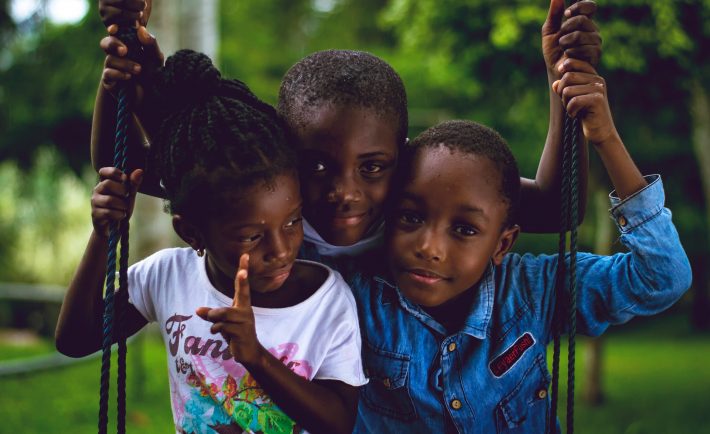
Image by Robert Collins on Unsplash
Communication is the most important aspect of any relationship. Sharing things with people in your life is important. We do this mostly by speaking and listening. It is important to share how you feel about things and to listen and try to understand how others feel about things (this is called empathy).
How good are you at both talking AND listening? If you favour doing only one of them in a relationship then this isn’t as balanced as it could be- you probably need to work on doing both and so should the other person.
Also sometimes people might say something but their body language (how someone uses their body or their facial expression) maybe saying something different. Take some time to consider what is your body language saying when you talk? What is their body language saying? Do you make eye contact when you talk?
A key to successful communication is to use “I” statements instead of “you” statements- eg. “I feel sad when you call me silly” is better than “You calling me silly makes me sad” because the second one can put the person on the defensive straight away and the conversation can go badly after that.
SCIENCE NEWS – Discovery of An Underground Ocean

Earth’s Underground Ocean
In 1864 the French author, Jules Verne, published his novel “Journey To The Interior of the Earth”. In this book 3 men explore volcanic tunnels that lead miles beneath the Earth’s surface, and have a number of strange encounters along the way. One of these is the discovery of a massive ocean, deep underground. Now, 150 years later, it seems that Monsieur Verne’s imagination may have been more accurate than he knew.
An enormous reservoir of water, roughly 3 times bigger than all of the Earth’s oceans put together, has been detected 400 miles below the surface. The water is trapped inside a layer of blue rock called ringwoodite, in the layer of hot rock between the Earth’s core and its surface) that is known as the mantle.
An Aspiring Champion for Team GB
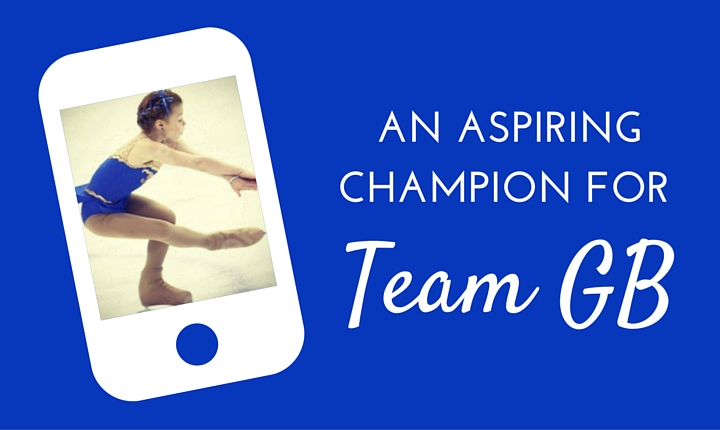
Meet Lilly Williams-Howell, a talented young skater from Prestatyn, in North Wales.
Lilly, who is now 11 years old, has been skating since age 7, and is now very close to realising her dream of representing her country. After a lot of training and practice, she now has the chance to skate at an international competition for Team GB. We talked to Lilly a little bit about her skating, and her hopes for the future.
Do You Hate School Uniform? – Written By You
My name is Daisy, I’m eleven years old and although I am English, I have lived in Germany nearly all my life! I speak German and English and can read and write both too. I enjoy writing and listening to music and am the middle child of three. My mother is an author.
Does your school have a school uniform? Having to wear those scratchy skirts? Tight stockings? With our normal clothes, you can show what kind of person you are! You can send a message out to the world with how you dress, what makeup you were and how you have your hair done!
School uniforms are stopping all this. Not being allowed to choose what to wear seems so unfair! Wouldn’t it be fair if we could choose if we wanted uniforms or not? People are debating on school uniforms and deciding if they should stay!