

Exploring Australian Alone

Sally-Anne was out and about in Australian, and took us along on a virtual trip. She shared her first impressions of the country, and then her love of the city of Melbourne.
In this report, she explains why she went to Australia alone, and what it is like to travel without companions.
If you’ve been reading some of my reports from Australia, you’d be forgiven for wondering why I haven’t mentioned any of the people I’m travelling with. That’s because there isn’t anyone, I’m on this trip all by myself. I wasn’t too worried before I came because I’m quite used to doing things alone. I live in my own flat, I went to a different high school to everyone I knew from primary school and I quite often go and visit places by myself, but I’d never travelled alone. In fact, I’d never been outside of Europe at all, even with other people, so the whole trip was a bit nerve-wracking, if exciting.
A Day In the Life Of…a Biologist
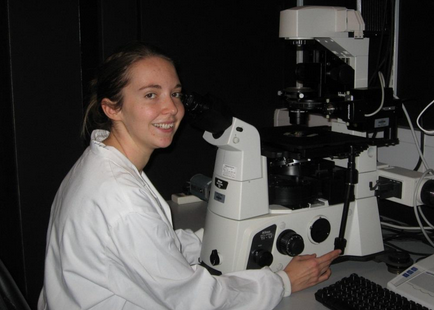
Ever wondered what being a biologist might be like? No two scientists work days are the same but I’m going to take you through my typical day to give you an idea
7 AM: I get up and eat breakfast (toast and a cup of tea) before travelling to work.
8 AM: I arrive at work (this is early for scientists, most of my workmates arrive at about 9 AM but I like to get up early!) After checking my email the first job of the day is to turn on the microscope above.

The plant root surface is covered in root hairs. This is what they look like under a microscope.To get an idea of the cells, les than 1mm of plant root can be seen in this image
It is similar to microscopes you may have used at school but with a few added features including a special camera. I am fascinated by plants and in my research I am trying to find out more about how some plants (including peas and beans) can form a friendly relationship (known as symbiosis) with soil bacteria, which provide nutrients that the plants need to grow. I use the microscope and camera to study living cells in plant seedling roots (where the symbiosis is set up).
10:30 AM: Tea break and seminar. I have a tea break with some of my workmates and then go to a seminar where other scientists talk about their research and we discuss it afterwards. Seminars are a great way to find out what experiments other scientists are doing, and to get ideas for new experiments to try.
12:30 PM: I have lunch with my friends.

1:15 PM: More experiments. For some of my experiments I have to grow plants in greenhouses. Today I visit to check on my plants and collect some to take measurements. This involves digging up the plants and cleaning them to look at their roots. This is fun, but messy!
3:30 PM: Afternoon tea break.
3:45 PM: Data analysis. I spend the last part of the afternoon drawing graphs of the data I have collected today and thinking about what it shows (does it answer the research question? Do I need to do further experiments?). I also spend some time reading research articles to find out about experiments other scientists have been doing.
5:30 PM: Hometime! Once I am home I have dinner and then relax.
One of the things I love about being a scientist is the feeling of discovering the “unknown”. The experiments I carry out reveal little details that when combined with other scientist’s data can help us build up a picture of how the plant-bacteria symbiosis is set up so that pea and bean plants can get the nutrients they need to grow. We hope that this knowledge might be able to help improve farming in the future.
About the Author
Sarah Shailes is a plant scientist working at the John Innes Centre, Norwich, UK. She studies how some plants can form a friendly relationship (symbiosis) with soil bacteria, which help the plants gain nutrients they need to grow. When she isn’t in the laboratory she enjoys knitting and hiking, and helps run a local Brownie Guide unit.
Facebook For Kids – Good or Bad?

Do you use Facebook? While it is officially banned for under 13 years, a survey last year showed that almost half of Britain’s pre-teens have a Facebook account. Joanna Bradey tells us what she likes about Facebook.
Facebook: What’s it all about?
Facebook is a website created in 2004 by a US college student Mark Zuckerberg. It started off as a way of college students to network with each other, which quickly spread throughout the world, and now has millions of members. Facebook works by people registering and creating a profile for themselves, and then becoming ‘friends’ with other people. A user can update their status to let their friends know what they’re up to, upload photos to share, send private messages to each other, and play games. You need to be at least 13 years old to be a member, and Facebook is banned in some countries altogether, like Syria and Iran.
The thing that I like about Facebook is that it is a quick and easy way to keep in touch with all those people I have met in real-life but don’t have time to write to or call them, like old workmates or family that have moved away. I can upload a photo and anyone I am friends with can see it, and comment on it. In the days before Facebook, if I wanted to share a photo with everyone, I would have to print out lots of copies and send them in the post, which is very expensive and time-consuming. Since I joined Facebook, I am better at communicating with people and I enjoy seeing what all my friends and family are doing. I think that I know them better and it’s easy to keep-in-touch.
Amazing Libraries and Bookstores Around the World
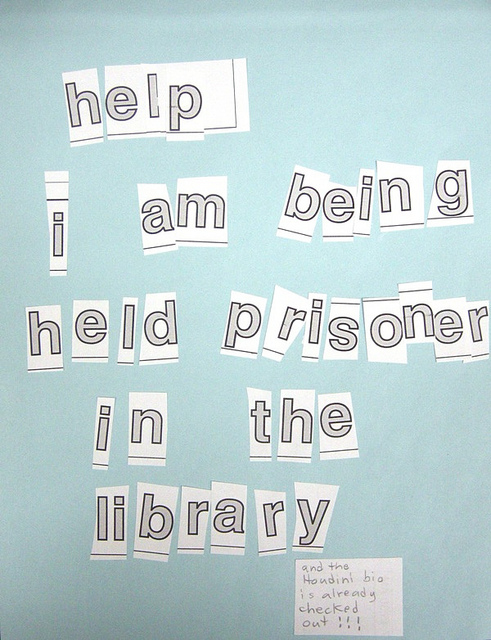
What do you like about going into a bookstore or library? Is it the smell of the books, or the sight of the different coloured spines, waiting to be pulled from the shelf, so that you can dive in?
We have compiled a list of some of the most amazing libraries and bookstores around the world. Some of them you may have heard of, others are less well-known, but all of them made us smile or gasp in wonder. Which one is your favourite, and which library or bookstore would you add to the list?
Real Gabinete Português de Leitura, Rio de Janeiro, Brazil

Real Gabinete Português de Leitura pic by Mathieu Bertrand Struck
A building so remarkable that this one photo cannot hope to do it justice – more pictures here. This is the largest and most valuable collection of Portuguese literature outside of Portugal. The library was constructed between 1880 and 1887 – the facade was carved out of limestone in Lisbon, Portugal and transported by ship to Rio.