An Aspiring Champion for Team GB
Meet Lilly Williams-Howell, a talented young skater from Prestatyn, in North Wales.
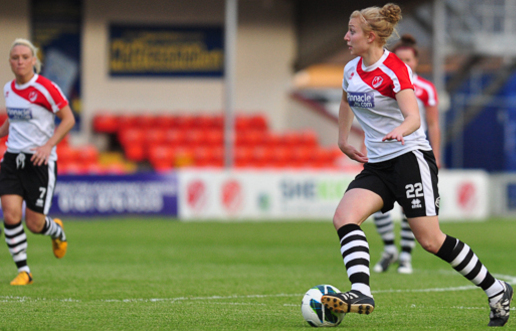
Lilly, who is now 11 years old, has been skating since age 7, and is now very close to realising her dream of representing her country. After a lot of training and practice, she now has the chance to skate at an international competition for Team GB. We talked to Lilly a little bit about her skating, and her hopes for the future.
3 Tips to Make your New Year’s Resolution Stick!
So the new year has begun and you’ve made a New Year’s resolution. How can you make sure it doesn’t go out the window by February? Perhaps these tips for sticking to your resolution will help…
New Year’s Resolution Tip #1: Be specific
Lots of people give up on their resolutions because they choose ones that are too big, vague and overwhelming. Whether your resolution is to do more sport, be a better friend, take up photography or anything else, you have a better chance of making it happen if you narrow it down.
For example, if your resolution is to be a better friend, make it your mission to remember your friends’ birthdays and to write a card for them, or to ask them often about what’s going on their lives. If you want to get more involved in sport, find out what sports your school or community offers and decide on a class to take or a team to sign up for. That way you have somewhere specific to start!
The UK General Election – An Explanation for Kids
Every five years, United Kingdom elects a new parliament. This is called a General Election and it’s pretty complicated. If you’ve ever wondered how a country decides who is going to run things, this is how! We asked our contributor Tina Price-Johnson to write an explanation of the General Election for kids.
When I was in Year 9, my school ran a mock general election, so we could learn how an election works. I was chosen to be the Liberal Democrat candidate, and two other students were chosen to represent the Conservative Party and the Labour Party. We didn’t have any other parties at that time!
We had to pretend we were running to be elected as a Member of Parliament (MP), and the other students in the school were the voters. We created posters and learned what each party stood for, so we could debate in front of the whole school and give our speeches. We spoke to students in the hallway, and each of us had a team of other students to help us out. This is exactly what all the candidates for MP in your local area will be doing. More or less!
Where Does the Word Candidate Come From?
Today is election day in UK, when the citizens of the country choose their new government. You can read all about how the elections work here. You wouldn’t think that dress codes of ancient Rome would affect the elections of today, but they do! Millie Slavidou explains.
Today is a good day to think about the word ‘candidate’. I rather like the etymology of this one.
It comes from Latin candidus, which is the past participle* of candidare, which meant ‘to make white, to make bright’.
Not because of whitewashing whatever the candidates might have said or done! It was because in ancient Rome candidates who wanted to be elected either to the Senate or any other office wore white robes.
If we take it one step further back, to a root meaning ‘white, shining’, we find that ‘candle’ is a cognate.**
*Past Particle
The past particle is the past form of the verb that can also be used as an adjective, like “a fallen tree”. In the case above, the adjective is like saying ‘whitened’ in English. Other examples of past particles are:
verb: bite
past particle: bitten
example: a bitten apple
verb: choose
past particle: chosen
example: aa chosen present
verb: crash
past particle: crashed
example: a crashed bicycle
**Cognates
A cognate is a distant relative, a word ultimately from the same root. Like a third cousin. Here are some examples of cognates.
Book is related to beech. Well, actually, book means beech! Both come from Germanic word meaning beech tree, Buche.
Germanic runes were originally inscribed on tablets made of beech wood. Modern German for book is Buch!
WOOL and FLANNEL are distant cognates. Today, fashion stores often describe plaid shirts as ‘flannel’, but it is actually a soft woven fabric, originally made of wool, but now often cotton or synthetic. You might have a flannel pyjamas, which are lovely and cosy in the winter!
Today’s featured image is Marasmiellus candidus, a type of mushroom. You will often find the word ‘candidus’ used in botany or biology to describe something that is white, such as crocus candidus or the white woodpecker Melanerpes Candidus. There is even a white monkey called Propithecus candidus.