Amelie is 9 years old and got in touch this week to ask if we’d publish her short story. Of course, we said that we’d love to share her work with our readers. We hope you enjoy it.
Hiya guys, I’m Lizzy and I’m cabin girl on the most dangerous ship ever. The Flesh Eater is a notorious battleship with the ugliest, fattest captain ever. His name is Sir Lownertour of Abinateye. And his crew, well you’ll guess what they’re like for sure. No-one could live with them, not even themselves! All they do is fire cannons at anything off the ship that moves.
All they do is fire cannons at anything off the ship that moves. Well, let me tell you lot about myself now. Firstly, if you wonder what I look like, I’ll tell you. I have greasy, knot-filled black hair and a ragged black hat. My royal blue top is not the sort of thing you’d wear for a normal day and my brown skin tight leggings are sooo ugly. To be honest, I’d kill myself if I had the time to do it. Only Aggie Bulicanee (my friend) actually cares about me. We take care of each other as though we’re sisters. The other day
The other day me and Aggie told some stories about life before we met. Unfortunately, I wish we never did; ‘cause now I totally want to be her. Surprisingly, Aggie lived in a mansion with all the money you could ever hope for! She had the most amazing mother and father who bought and did anything she wanted. They were called Ariana Bulicanee and Ash Bulicanee. Sadly, Ariana died when Aggie was 12. Ash then ran away and rumours were that he sank in the ocean and drowned. Aggie took the money and began her search for a new family. But whilst doing that, she bumped into Sir
Aggie took the money and began her search for a new family. But whilst doing that, she bumped into Sir Lownertour of Abinateye. Next, I told her my story: I was a poor girl who had lost her family in a war when she was 4. I lived in north Syria and lost my parents in the Battle-of-Abinateye. Part of the army were Sir Lownertour’s crew. They took me away to this ship where I became cabin girl. So up until
So up until now, I’ve worked for Sir Lownertour, except for the fact that I’m planning to escape this monstrosity of a ship with Aggie. I’ve got Plan a], Plan b] and Plan c]. All I need to do now is find her. “Aggie!” I called. “Where are you? We’re running away remember. And we’re going now.” No reply. “Aggie! Aggie! Aggie!” I shouted again. “Aggie we’ve got to go if you want to escape!”
“Aggie!” I called. “Where are you? We’re running away remember. And we’re going now.” No reply. “Aggie! Aggie! Aggie!” I shouted again. “Aggie we’ve got to go if you want to escape!” Still no reply. “Uhhhh!” I sighed. “Where are you now?” After 10 minutes of calling, I finally realised that no-one could hear me. A moment later I slowly started to stride forward into the depths of the ship. About an hour passed before I found Aggie lying on the floor, eyes shut.
About an hour passed before I found Aggie lying on the floor, eyes shut. Is she dead? I asked myself. If she is, I wish I had stuck with her the whole time instead of letting her wander of out of my line of sight. As you probably guessed, I’m sort of Aggie’s master because Sir Lownertour thought I was worth more than my friend. Now I have an assistant; Aggie Bulicanee. It is my responsibility to keep Aggie alive and unhurt.
How about we go back to Aggie, and if she’s dead or not? She lay there like a child who has just entered the world’s largest sweet shop and fainted because it’s just like paradise. Cautiously, I stooped down to pick her up. I never knew Aggie was this heavy!!! It was like holding a boulder and having to walk up a mountain with it in your arms. Aggie isn’t fat of course, but she is a bit greedy.
In a daydream, I knocked on the ship’s surgeon’s door, but no-one answered. “Where is everyone?” I said aloud. “It’s like everyone has gone on an adventure!” Annoyed, I gently put Aggie down on the polished, wooden floor. I rolled up the escape plans and strolled onto the deck. As slow as a sloth, I scanned the ocean for any signs of life.
“Looks like it’s just me and you now Aggie,” I muttered. “And I don’t think anyone’s coming back for us.” I took a glance at Aggie before unrolling my plans to escape. It’s worth a try, I thought. We could try to row away on the rescue dinghy. Unhelpfully, I left Aggie on the floor and began to lower the small dinghy into the calm waves of the Pacific Ocean. After that, I packed mine and Aggie’s bags with food and water, clothes, a waterproof for each of us and a first aid kit.
The next minute, I was hauling Aggie down into the boat with her rucksack. The waves gently rocked the dinghy as I clambered down into the boat. It was definitely not what I expected. I expected it to be spaced out with room for our bags and things, but it was squishy and hard to move around. Luckily I got used to it before we were far from anywhere.
“Lizzy, why do I see water and wood?” murmured a soft voice. Alarmed, I turned around to see Aggie sitting up, leaning against the side of our dinghy. “Aggie! You’re alive!” I bent down and picked Aggie up in a bone-crushing embrace. When back on the floor, Aggie told me about Sir Lownertour and how he had tranquilised her and ran off with his crew.
“We’re off to find the treasure of Arcaydia,” he had said. “So this is what I have to do.” Then he shot her. “So now he’s looking for some treasure, the treasure of Arcaydia. I’ve heard of that before,” I said.
“Urm…….. it sounds dangerous – but tell me about it,” added Aggie.
“Fine, there’s many rumours about the treasure of Arcaydia. I’ll tell you a couple, but keep them secret, or else. Rumour 1: People say that one ruby crushed into a juice and drank by an ordinary human being would make them immortal! That’s probably why Lownertour wants it. Rumour 2: It is said to last forever, meaning if the money disappears, then it reappears. That’s all I can tell you Aggie. Because that’s all I can remember.” I explained.
The next few hours passed and I began to feel sea-sick. But just as we were going to give up, Aggie saw a thundercloud overhead. “A storm!!!” she cried. Then it all happened so quickly. First the waves pushed and tugged at our dinghy. Next, we were soaring through the air, face-first into a huge rock.
I tried to open my eyes, and successfully opened my right one, but not my left eye. I sighed. This was useless. Trying to open an eye that you landed on when soaring through the air is not worth a try. My voice was weak and small. You had to press your ear to my mouth to hear me properly. Aggie didn’t say anything, but I could see her budging closer to hear me.
CRASH!!! Unluckily for us, we were in the middle of the Pacific Ocean when a storm decides to make its way towards us. Our little rock on the tiny island was only just enough to provide us with shelter. I spun around to come face to face with an enormous mouth of a cave.
“This is perfect” I exclaimed. “We could find some trees around the back of this place and build a cabin here until someone finds us.” So we sprinted across the stone and onto the grass. A tall palm tree stood in front of us, making both of us feel small. Behind it stood more palm trees, no taller than the first one. I slowly moved into the triangle of trees, searching for something to cut the branches with. “Over here!” cried Aggie. I made my way towards her to find an axe propped up on a log. “
“Over here!” cried Aggie. I made my way towards her to find an axe propped up on a log. “
“Perfect,” I said aloud. “Just what we need. But how did it get here? Someone must have been here before us.” I bent down to pick up the axe but was stopped by the sound of waves tumbling towards us. What is happening, I thought. Then I realised, A TSUNAMI!!!
I looked at Aggie and by the look on her face, I knew at once that she knew what I did. This was the end. The end of mine and her life. On the horizon, I could just make out the shape of another Battle-Ship. My eyes fuzzy, I didn’t have enough hope to believe what I was seeing. Fighting back my tears, I kneeled down and began my prayers. Mother, father
Mother, father, I whispered. If you can hear me, I want you to know that my life has been good, even though most of it was with Sir Lownertour of Abinateye. Let’s look on the bright side, at least now me and Aggie get to see our families again. When I’m up there, I’ll tell you all about the wonderful times me and my friend have had together. I could feel the water on my skin. I only had enough time to shout, “Aggie, you’ve been a great friend!” before being swept away
I could feel the water on my skin. I only had enough time to shout, “Aggie, you’ve been a great friend!” before being swept away into the waves. I was pushed and pulled, tugged around and my socks fell off at one point! I could see Aggie some way off so I fought with all my strength to get to her. Although my legs ached like mad, I eventually managed to reach her. My lungs were bursting. I grabbed her hand and made a small smile in her direction. A few seconds later, something very strange happened. We began to rise up, up and up until we finally broke the surface, my hand still in hers. My eyes shut, I felt the familiar feeling of
A few seconds later, something very strange happened. We began to rise up, up and up until we finally broke the surface, my hand still in hers. My eyes shut, I felt the familiar feeling of a wooden floor. “Sir…. Sir Lownertour, is that you, my lord.” I asked. I could hear strange voices around me, one was deep and low and Aggie made a small sound of recognition when the man who it belonged to spoke. Bored of just hearing the men around me, I opened my right eye, but as you will remember, I can’t open my left one. It was a great but ugly scene. A man was towering above me. A man who was the youngest of them all. He had a short, brown beard and long ginger hair tied into a ponytail. We were safe!!! “The name’s Ash,” he said. “Ash Bul. I’m 34. And you are?”
Bored of just hearing the men around me, I opened my right eye, but as you will remember, I can’t open my left one. It was a great but ugly scene. A man was towering above me. A man who was the youngest of them all. He had a short, brown beard and long ginger hair tied into a ponytail. We were safe!!! “The name’s Ash,” he said. “Ash Bul. I’m 34. And you are?”
“The name’s Ash,” he said. “Ash Bul. I’m 34. And you are?”
“Lizzy Brook and this is Aggie Bulicanee, my friend.” I made a gesture towards Aggie. “We’re both 15. Do you know anyone that goes by the name of Sir Lownertour of Abinateye?”
“I’m afraid not, kid,” Ash replied. He bent down and examined my eye. We had an unspoken conversation and I looked at Aggie, she knew that she needed to come with us. I strode lazily across the deck and sat down on a chair while Ash summoned the doctor. In the moments of peace we had on those chairs, me and Aggie never said a word.
The doctor was a kind fellow. He had short, blonde hair and big, round glasses. He gave me some medicine that tasted like year-old socks in an apple pie. Just like twins, we both made a disgusted face when the liquid touched our tongues. His name was
His name was Dr. Maxwell. Next, we were escorted to the captain, Captain Nowlleenee. “You were rescued from the sea. Well done Ash. And let me tell you, this girl looks a lot like your daughter,” he said. Suddenly all eyes were on Aggie’s pale face. She lifted her hands as though surrendering. “Don’t look at me,” she said. “No-one in this place thinks I look like this weirdo’s daughter.
“Don’t look at me,” she said. “No-one in this place thinks I look like this weirdo’s daughter. Except that guy.” Four pairs of eyes got back to their not-quite daily jobs. I told Aggie to follow, and we both left the captain and his youngest crew member in peace.
What was that about? I thought. I know she doesn’t keep secrets from me, but I really felt like Aggie was. At dinner, the crew were gathered around a circular table to have fish and chips. After that, we got sent to bed by one of the crew. Our room had bunk beds, a chest of drawers, a desk with a mirror and a beautiful rug on the floor. I couldn’t sleep that night. There was no problem with the room, I just thought Aggie wasn’t telling me something. Eventually, I drifted off to sleep. The next morning Aggie was nowhere to be seen. I jumped out of bed, put my dressing gown and slippers on, and tiptoed down the corridor. In three minutes time, I heard voices from a closed door. Aggie and Ash. I pressed my ear against it and this is what I heard:
Aggie: So, do you really think I’m your daughter.
Ash: Well, my name’s Ash Bulicanee and I was married to a woman called Ariana Bulicanee. I had a daughter named Aggie. Basically yeah, I am your father.
Aggie: Oh dad! It’s really you! Three years without you and now you’re standing right in front of me!!! But your friends said you drowned.
Ash: Forget about them. They’re just my friends. Now we need to escape from here without being caught.
Aggie: But dad, what about Lizzy? We can’t leave her.
Ash: We don’t have to, I’ll adopt her.
As they walked arm in arm towards the door, I backed off. I was stood in a shadow when they opened the door. “Lizzy! Were you eavesdropping?” enquired Ash.
“No,” I replied. “But somehow I heard that you are father and daughter. And that you are going to adopt me.” We all smiled a cheeky grin and set off on our journey, our journey to a happy life.
So now that Lizzy has been adopted, Aggie and Ash are a happy family once more. If you ever happen to come across a family of three, each one with their own special tales, make sure you ask them to tell you their story about how they lived through storms and tsunamis. Because that family will surely be Aggie, Ash and Lizzy.
The End



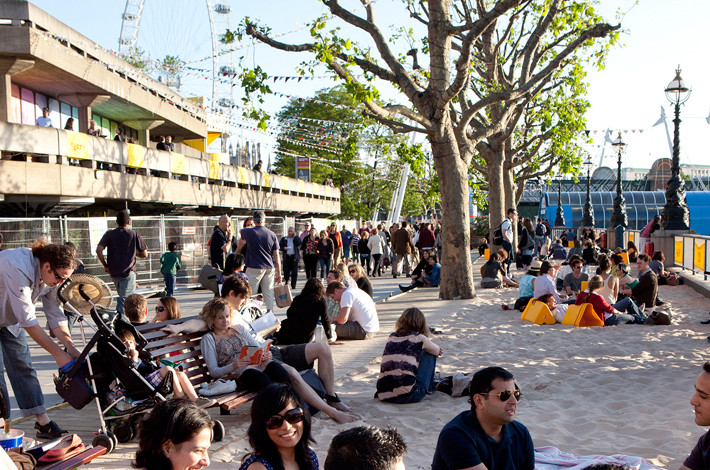



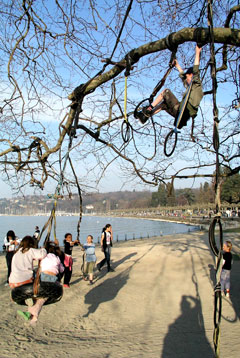

 Now, don’t tell your parents that we showed you this, and don’t try it out at home, but how awesome does this look? We can’t help thinking that this would be VERY messy, but it looks so relaxing and fun!
 This was built in Japan in 1993 – an artificial beach with a retractable roof. It was not commercially successful and closed over 10 years ago. Which is a real shame, because it looks really amazing.