

Birds Eye View – Poetry Written By You

Hi, my name’s Daisy and I have a passion for writing and poetry.
One thing I like to write poems about are birds because they are such free and stunning creatures that fill the skies with their sweet sounding songs and happy chirps. I have written a poem about a bird flying in the Norfolk Countryside because that is where I live.
I wrote this poem when I was 10 years old. I have now just turned twelve so although it is not one of my latest poems I would still like to share it with you. If you know Norfolk you might recognise some of the places in the poem.
Move Over Girls, and Make Space for Ballet for Boys
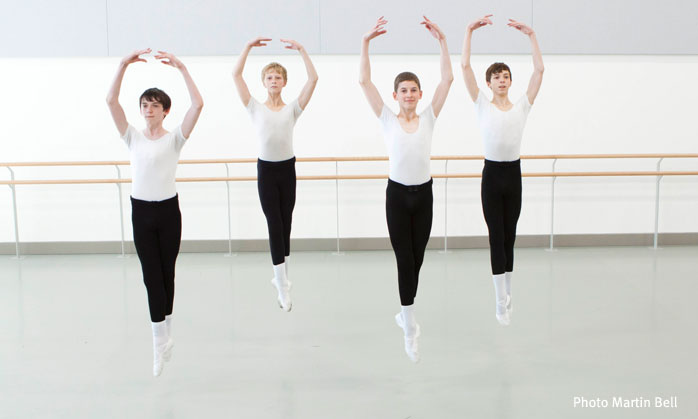
DANCE is for EVERYONE!
When did people begin to dance? No one knows for sure, but dancing has been around for as long as there have been people!
Dancing provides people with a wonderful tool to express their emotions and thoughts. They can communicate to others what they are feeling and their state of mind. Dancing connect people. All around the world, there is dance. Over many centuries, every country and culture has developed typical dances of its own. They are part of peoples’ traditions.
Aside from these cultural dances, dance developed for performance.
People have always passed on their old dances from generation to generation and always enjoyed dancing them. In addition there were also modifications, changes, new steps and other dance moves. More dances evolved.
We will, in this series of articles, look at the different styles of dance and find out how you can get involved. We shall start with BALLET and ask the question ‘Is ballet for boys too?’
What is ballet?

Ballet was created in the courts of Italian princes about 500 years old. A royal dance school was later founded in France by Louis XIV in 1661.
Many positive benefits are associated with learning the art of ballet. Besides learning the traditional techniques of ballet, ballet lessons can also nurture a positive self image. Ballet teaches skill, grace, poise, self-discipline and confidence. If your dream is to become a dancer, you must practice a lot in order to master the many challenging poses and steps of ballet. You will begin by learning the rules and traditional techniques of ballet.
Why should I learn Ballet?

Ballet lessons have three major benefits. First of all, a dancer expands their vocabulary through learning the French names of the steps and hearing the musical terms. Secondly, they develop their musicality and rhythm through coordinating their bodies to the music. A third benefit is that memorising new steps and dances improves the memory of young ballet students.
So, Ballet makes you smart!
Dance offers a greater range of motion, coordination, endurance and strength than most other physical activities. If you have an interest in any kind of future in dance, you’ll need ballet because that’s where you learn the basics. But even if dance isn’t the ultimate goal, ballet lessons improve posture, flexibility, coordination, strength and grace. They also provide an opportunity for you to be active regardless of the weather outdoors.
So, Ballet makes you fit and strong! This IS looking promising.
Ballet lessons can also be good for a kid’s development by improving their social skills. It’s been suggested that ballet classes encourage kids to form new friendships. Dancers also get to interact with positive role models in their dance teachers. In ballet class, you need to follow directions closely and discipline yourself to not run around the space of the dance studio! Your confidence will grow as you develop new skills and perform in front of an audience. My dancers love to perform for their friends and family. After working hard all year, my students feel a sense of accomplishment while performing on stage in awesome costumes.
So, Ballet can make you a more confident person! What’s not to like?!
Is Ballet just for girls…? No, definitely not! More girls than boys do ballet, but the ballet that girls do is very different from ballet for men and boys. Male ballet dancers have to be strong and athletic. When scientists tested male ballet dancers against sportsmen, they found that the dancers were fitter and able to keep going for longer. Lots of sports clubs invite Ballet teachers in sometimes to give the players a lesson! It’s great for their balance, agility and core strength.
So, Ballet is great for boys too! Sign me up.
Naomi is an AISTD trained dance teacher, has been teaching since 1994. As well as a long career in dance schools, she has also been Head of Dance in a sixth form college. She runs a small, encouraging dance school offering classes for children and young adults in Ballet, Tap, Jazz and Linedancing, as well as Dancing Hands which uses songs and signing to introduce Ballet to pre-school dancers. The school is based in Bassingbourn and Litlington, on the border of South Cambridgeshire and North Hertfordshire, UK. Naomi has a particular love for working with children and young adults who have learning difficulties – dance is for everybody! Find out more on www.dance-matters.co.uk
SCIENCE NEWS – Discovery of An Underground Ocean

Earth’s Underground Ocean
In 1864 the French author, Jules Verne, published his novel “Journey To The Interior of the Earth”. In this book 3 men explore volcanic tunnels that lead miles beneath the Earth’s surface, and have a number of strange encounters along the way. One of these is the discovery of a massive ocean, deep underground. Now, 150 years later, it seems that Monsieur Verne’s imagination may have been more accurate than he knew.
An enormous reservoir of water, roughly 3 times bigger than all of the Earth’s oceans put together, has been detected 400 miles below the surface. The water is trapped inside a layer of blue rock called ringwoodite, in the layer of hot rock between the Earth’s core and its surface) that is known as the mantle.
Let Toys Be Toys
