

The British Skeleton Team – Sliding to Victory
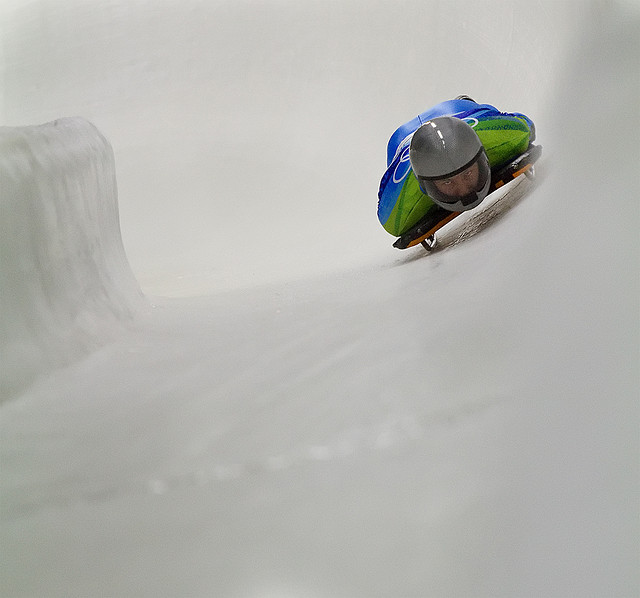
How would you like to slide down a very steep and winding track of ice on something very similar to a tea tray at around 140km per hour? Yes, no, maybe. Well, there are people out there who can and do want to. And what’s more, they’re really rather good at it.
Alongside Bobsleigh and Luge, the Skeleton is one of three sliding sports that take place on artificially refrigerated ice tracks. It’s a really white knuckle experience as each skeleton athlete pushes their sled one handed away from the start before lying down with their face first as they travel the track, using their shoulders, knees and toes for steering.
Rock, Paper, Scissors… Robot???
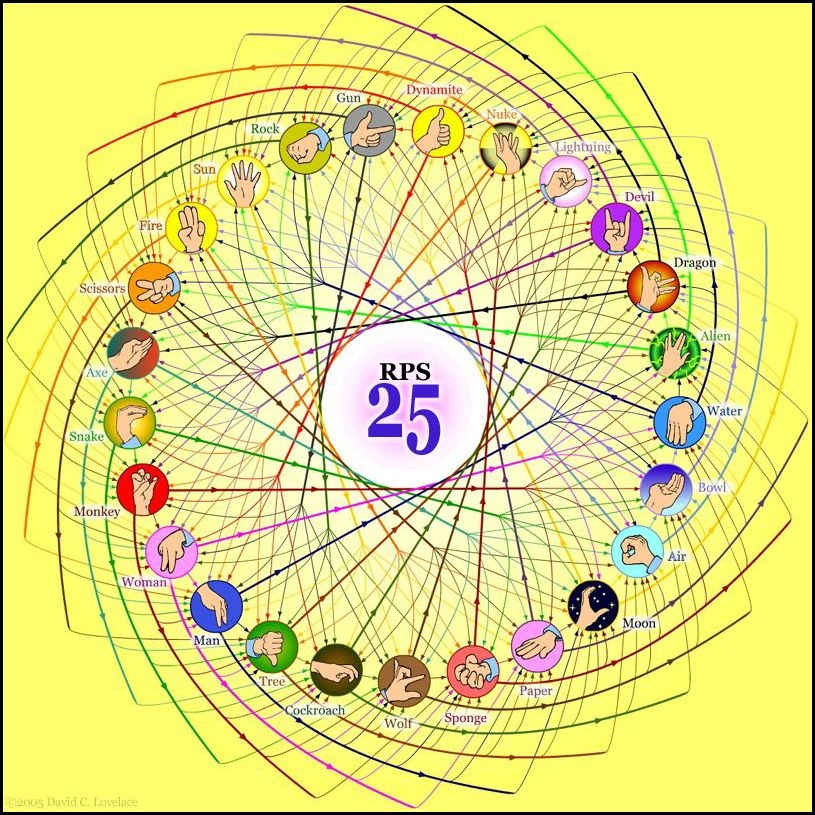
The game rock-paper-scissors is well known around the world. We’ve all used it as a choosing method, or simply as a game! The easiest version is played between two people. Both players choose one of the three shapes for one of their hands, and reveal their choice at the same time, hoping their choice beats their opponent.
It’s nearly impossible to gain an advantage over your opponent, unless you wait long enough to identify their choice before you make yours, but the chances are that they will realise your cunning plan and call you a cheater!
This game is not simply a choosing game. There are mathematicians dedicated to constructing algorithms for the best strategy to win, and scientists devoted to creating unbeatable robots! In fact, researchers at the University of Tokyo have created a rock paper scissors robot that wins at rock-paper-scissors 100% of the time.
SCIENCE NEWS – Discovery of An Underground Ocean

Earth’s Underground Ocean
In 1864 the French author, Jules Verne, published his novel “Journey To The Interior of the Earth”. In this book 3 men explore volcanic tunnels that lead miles beneath the Earth’s surface, and have a number of strange encounters along the way. One of these is the discovery of a massive ocean, deep underground. Now, 150 years later, it seems that Monsieur Verne’s imagination may have been more accurate than he knew.
An enormous reservoir of water, roughly 3 times bigger than all of the Earth’s oceans put together, has been detected 400 miles below the surface. The water is trapped inside a layer of blue rock called ringwoodite, in the layer of hot rock between the Earth’s core and its surface) that is known as the mantle.
Shooting stars, Weather, and Rocks falling from the Sky!
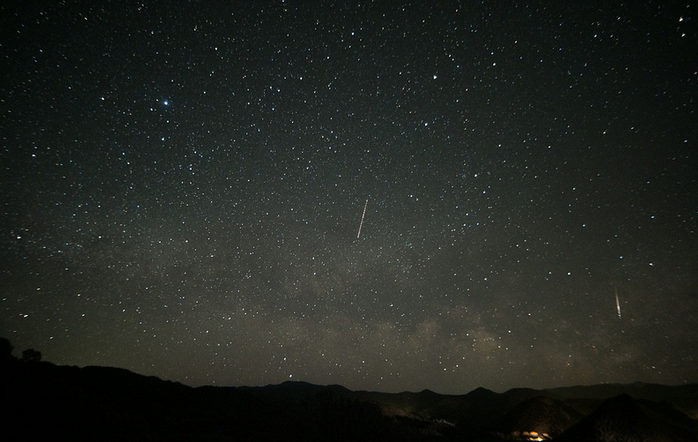
What do shooting stars, weather and rocks falling from the sky have in common? Are you wondering whether we have gone mad asking such a question? Do rocks ever fall from the sky? Of course they do! You might know them better as “meteorites”, and they are meteors, or rocks from outer space, that fall down to the earth. And what does that have to do with weather? It’s not like they come down like rain! And before you say to yourself “meteor shower”, remember that a meteor is actually a shooting star, a space-rock that burns up in the Earth’s atmosphere. Related, yes, but weather, no.
The weather connection is through another word, generally used to mean “study of the weather”. That word is “meteorology”. As you can see, all three have something in common – the word “meteor”.
So what is this word, and how did it come to mean these different things?
Meteor came into English through French in the late 15th century. In French it was meteore. Very similar, you might think. Does this mean that it is a French word. Not at all. The next question we must ask ourselves is where did French get it from? The answer is from Medieval Latin meteorum, which meant “things in the heavens”. But this is not the end of the tale. Latin took the word from ancient Greek, and in Greek we can analyse the word to see what it really means.
The Greek word μετέωρα (meteora) can be broken into two parts: meta, which means “over, beyond” and aora, which comes from the verb αείρω/ αίρω (aeiro, airo), which meant “to raise, lift up”. Even today, in Modern Greek, αιωρείται (aioreitai) means “it hovers”. All this means that the original meaning of the word was “thing that is raised in the air”. And even in ancient times this developed to mean “things in the sky” and gradually came to have the meaning it does today.
Another interesting point is that the word “air” is in fact from the same root as αείρω (aeiro), which makes it a distant cousin, or cognate, of “meteor”.
Did you know:
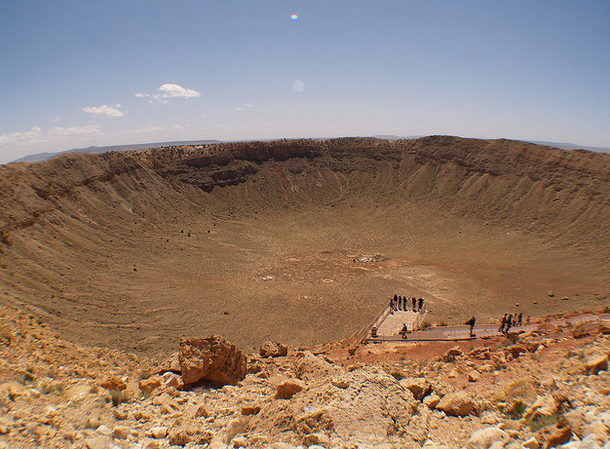
One of the largest and most famous meteor craters is to be found in northern Arizona, desert of the U.S. It is 1,200m wide, 170m deep and calculated to be created 50,000 years ago! It is more commonly known as the Barringer Crater.
Title Photography: Mike Lewinski 2013