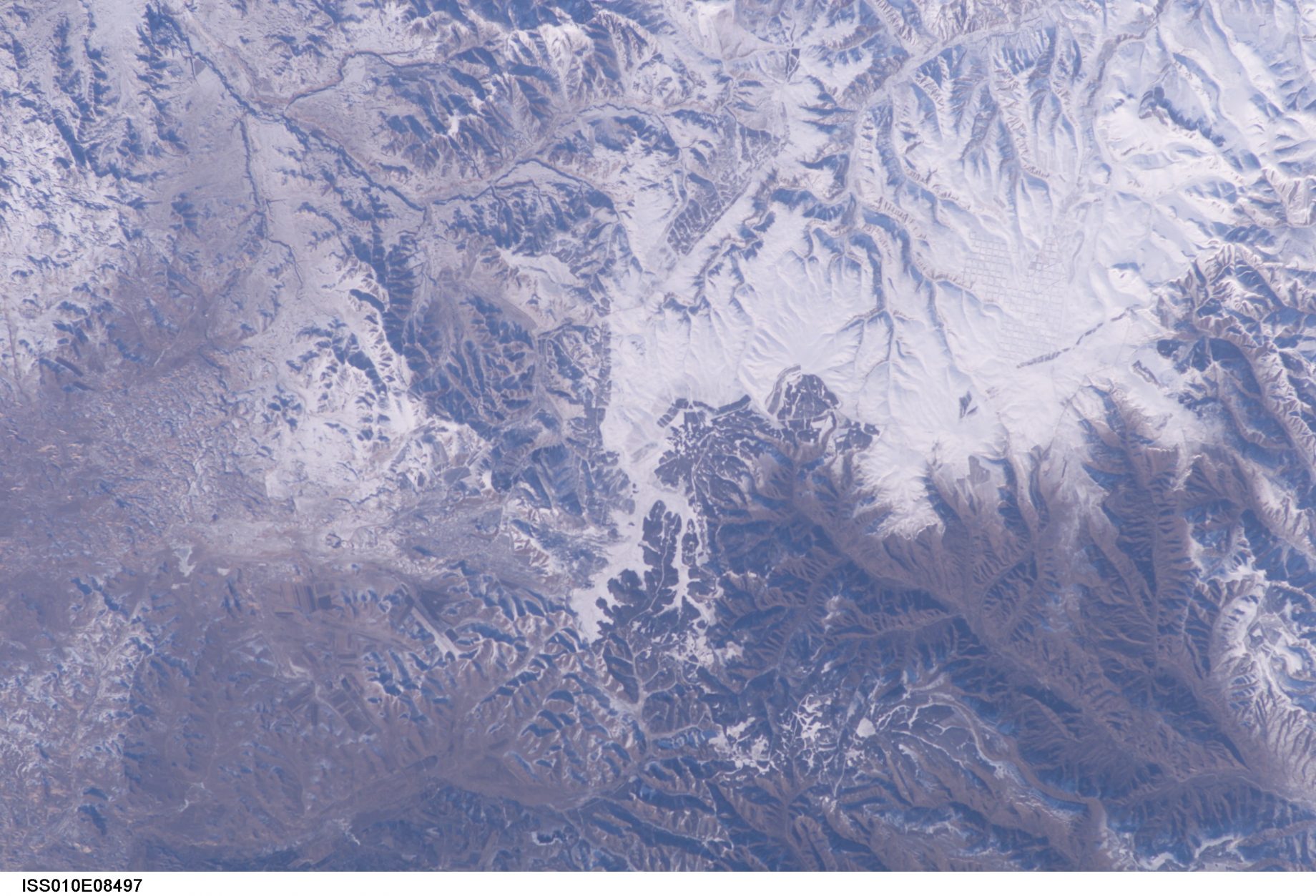

Once upon a time, in ancient China, there lived a wise and mighty dragon. His name was Cha-Cha. He being a magical dragon, he had many enemies. Among these were an ancient race, whom battles with Cha-Cha had all but killed off.
Only one remained. He was the great ”Earth Traveller” or E.T. for short. E.T. could take many forms, including a long pink one that he had to fill in for the birth of his 100th son.Other than these he could take the forms of fearsome animals, such as a tiger, a snake or a badger.
Have you been inspired by the Great British Bake Off?
We are BIG fans of 17 year old Martha, and love that she has shown Britain that kids can bake just as well (if not better!) than adults. After leaving the show, Martha said “I wanted to show that young people can do it and you don’t need hundreds of years of experience”.
A lot of you probably have already done a bit of baking with parents or grandparents, but moving on to baking independently can be a bit daunting.
To help you get your bake on, we’ve some tips on getting started, and simple recipe ideas that will make you feel like you’ve baked a showstopper. So, move aside, mums and dads, this is all about baking for kids!
On Your Marks, Get Set… BAKE!
Image Credit
Before you start to bake, get all your ingredients out and put them on the worktop. This prevents you getting halfway through the recipe and then noticing that you’ve run out of something really vital, like eggs!
Most scientists believe that the Universe began in a Big Bang around 14 billion years ago. The entire Universe was inside a bubble thousands of times smaller than a pinhead, and was hotter and denser than anything we can imagine.
When the explosion called the Big Bang happened, the Universe as we know it was born. In a fraction of a second, the Universe grew from smaller than a single atom to larger than a galaxy. It kept on growing, and is still expanding today.
Now researchers in America think they have found traces left in the sky that prove this that the Big Bang did really happen. It takes the form of a distinctive twist in the oldest light detectable with telescopes. These twists of light are called ‘gravitational waves’ – the effect is a little bit like how waves form on the surface when you drop a big stone in a pond. However, you also have to imagine that the Big Bang formed the pond itself.
The team leading the project, known as BICEP2, has been using a telescope at the South Pole to make detailed observations of a small patch of sky. The aim was to find evidence of ‘inflation’ – the idea that the cosmos grew rapidly in its first trillionth, or trillionth of a trillionth of a second – growing from something unimaginably small to something about the size of a marble.
The leader of the team, Prof John Kovac of the Harvard-Smithsonian Center for Astrophysics said:
“This is opening a window on what we believe to be a new regime of physics – the physics of what happened in the first unbelievably tiny fraction of a second in the Universe.”
Over the coming years, scientists will work hard to investigate every aspect of this discovery. Other experiments will be carried out to see if they can replicate the findings of the American team. If this research is confirmed, it will be one of the greatest scientific discoveries of our time.
EDIT
Dr Sarah Bearchell drew our attention to this video, which explains the concept of gravity and gravitational waves with the help of a towel, an apple and a ping pong ball. Check it out