How Did the Penguin Get its Name?
These days, we all know what a penguin looks like. Even if you haven’t seen a real, live penguin, I’m sure you have seen pictures, perhaps watched them in a film. It seems strange to think that people in Europe had no idea they existed for so many centuries! Perhaps you have wondered about that part of history.
Shooting stars, Weather, and Rocks falling from the Sky!
What do shooting stars, weather and rocks falling from the sky have in common? Are you wondering whether we have gone mad asking such a question? Do rocks ever fall from the sky? Of course they do! You might know them better as “meteorites”, and they are meteors, or rocks from outer space, that fall down to the earth. And what does that have to do with weather? It’s not like they come down like rain! And before you say to yourself “meteor shower”, remember that a meteor is actually a shooting star, a space-rock that burns up in the Earth’s atmosphere. Related, yes, but weather, no.
The weather connection is through another word, generally used to mean “study of the weather”. That word is “meteorology”. As you can see, all three have something in common – the word “meteor”.
So what is this word, and how did it come to mean these different things?
Meteor came into English through French in the late 15th century. In French it was meteore. Very similar, you might think. Does this mean that it is a French word. Not at all. The next question we must ask ourselves is where did French get it from? The answer is from Medieval Latin meteorum, which meant “things in the heavens”. But this is not the end of the tale. Latin took the word from ancient Greek, and in Greek we can analyse the word to see what it really means.
The Greek word μετέωρα (meteora) can be broken into two parts: meta, which means “over, beyond” and aora, which comes from the verb αείρω/ αίρω (aeiro, airo), which meant “to raise, lift up”. Even today, in Modern Greek, αιωρείται (aioreitai) means “it hovers”. All this means that the original meaning of the word was “thing that is raised in the air”. And even in ancient times this developed to mean “things in the sky” and gradually came to have the meaning it does today.
Another interesting point is that the word “air” is in fact from the same root as αείρω (aeiro), which makes it a distant cousin, or cognate, of “meteor”.
Did you know:
One of the largest and most famous meteor craters is to be found in northern Arizona, desert of the U.S. It is 1,200m wide, 170m deep and calculated to be created 50,000 years ago! It is more commonly known as the Barringer Crater.
Title Photography: Mike Lewinski 2013
Why do we get Hiccups?
Everybody gets hiccups (also sometimes spelt ‘hiccoughs’). Even when babies are still in the womb they hiccup, which can feel very odd to their mother! But why do we get them and how can you stop them?
What are Hiccups?
Hiccups are caused by the diaphragm (pronounced DYE-uh-fram). This is a large, dome-shaped muscle that sits at the bottom of your chest cavity, below your lungs. When we breathe in the diaphragm tightens, helping to pull air into the lungs, and when it relaxes it forces the air back out again. Sometimes the diaphragm becomes irritated and instead of tightening smoothly it does it in a jerky way, which makes air suddenly rush into your throat. This air is stopped when it hits the voice box and makes the opening between the vocal cords close very suddenly. This is what produces the sound of the hiccup.
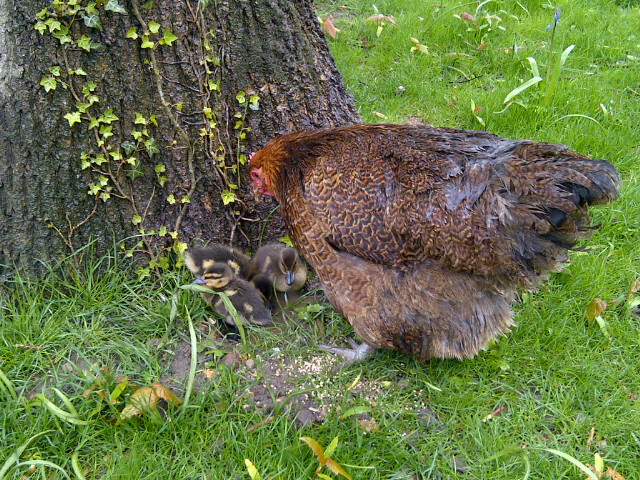
Ducklings in Disguise
You know the story of the Ugly Duckling of course, who didn’t look like his family but grew into a beautiful swan? Well, this is a true story of three little chicks who are going to grow into beautiful ducks, as told by Susannah Leigh.
It all started when my friend Nic’s very favourite chicken, Rosie became broody. Rosie laid some eggs and sat on them very carefully for a very long time. But the eggs didn’t hatch and Nic realised that they were probably never going to. Sometimes they just don’t.
Poor Rosie – all that patient waiting for nothing.